2 BHK vs 3 BHK: The Smart Investor's Guide for 2026
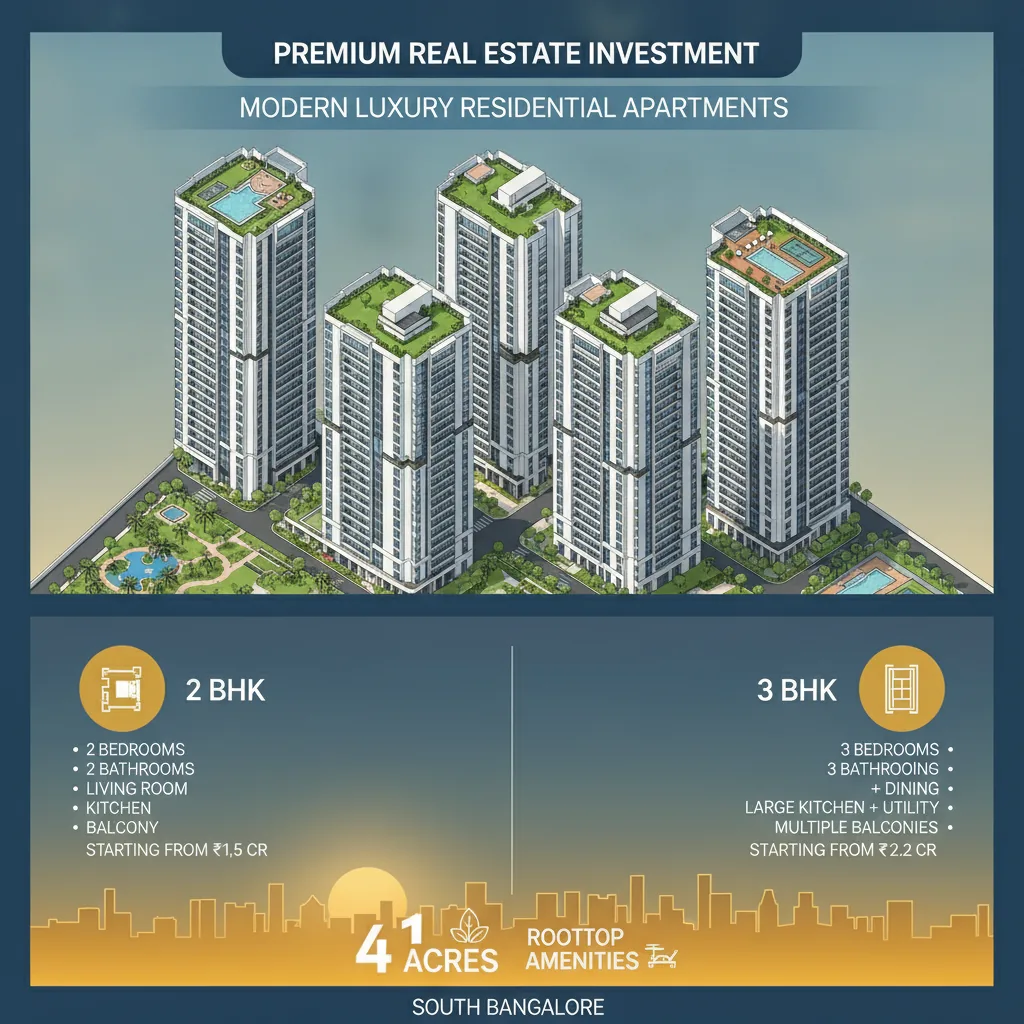
A 2 BHK vs 3 BHK: The Smart Investor's Guide for 2026 will help you navigate the changing dynamics of the real estate market to maximize your returns. Over the last year, the housing sector has shifted heavily, driven by rising disposable incomes, hybrid work habits, and a growing demand for luxury spaces. While a 2 BHK apartment has long been the default safety net for rental income and affordability, premium 3 BHK units are rapidly gaining momentum among serious homebuyers.
For an investor, choosing between these two configurations is no longer just about the number of rooms—it is about balancing immediate cash flow with long-term wealth growth.
The Head-to-Head Investment Breakdown in 2026
To build a high-performing property portfolio, you must evaluate how both options perform across core financial metrics.
1. Rental Yield vs. Absolute Rent
Rental returns look vastly different depending on the size of the asset you purchase:
- 2 BHK Apartments: These remain the undisputed champions for percentage-based rental yields, typically tracking between 3.5% to 4.3% in metropolitan hubs. Because the entry price is lower, the ratio of rent-to-cost is highly efficient. They attract young working couples and small nuclear families, ensuring almost zero vacancy risk.
- 3 BHK Apartments: While their percentage yield is slightly lower (2.8% to 3.5%), they fetch much higher absolute monthly cash. In prime corporate corridors, senior executives and multi-generational families willingly pay a heavy premium for the extra space.
2. Capital Appreciation and Future-Proofing
The market is currently witnessing a massive wave of "premiumization," where buyers prioritize lifestyle over basic cost-cutting.
- The "Flex-Room" Demand: Thanks to stable hybrid work schedules, modern families look at a third bedroom as a functional necessity—a dedicated home office, a study zone, or a guest room.
- Higher Growth Margin: Because of this intense end-user demand, premium 3 BHK units in flagship gated townships are appreciating at a faster clip (9% to 11% annually) compared to standard compact 2 BHK flats, which are growing at a steady but slower rate of 7% to 8%.
3. Exit Load and Resale Liquidity
When it is time to sell the asset and book your profits, liquidity becomes your primary concern:
- 2 BHK units sell much faster. Their lower total ticket size fits perfectly into the budget of first-time buyers, creating a massive, highly active secondary market pool.
- 3 BHK units take longer to liquidate because the buyer pool is smaller and more selective. However, they command much higher profit margins upon resale, especially if located in high-growth suburban corridors or luxury micro-markets.
Optimize for your specific financial target. If your primary goal is steady monthly passive income with high liquidity, a 2 BHK fits perfectly. However, if you are targeting elite profiles, premium projects like Prestige Falcon City Luxe offer ultra-premium 3 BHK and 4 BHK layouts that maximize long-term generational wealth and high resale margins.